Genkit, TypeScript, and a very well-designed developer experience
Alex Sanz·1 min read
#Genkit#TypeScript#AI+2
I came across Genkit at the European GenAI Summit and, although I have not explored it deeply yet, the first impression has been very strong.
Not only because of how quickly you can build flows and pipelines, but because of how polished the developer experience feels.
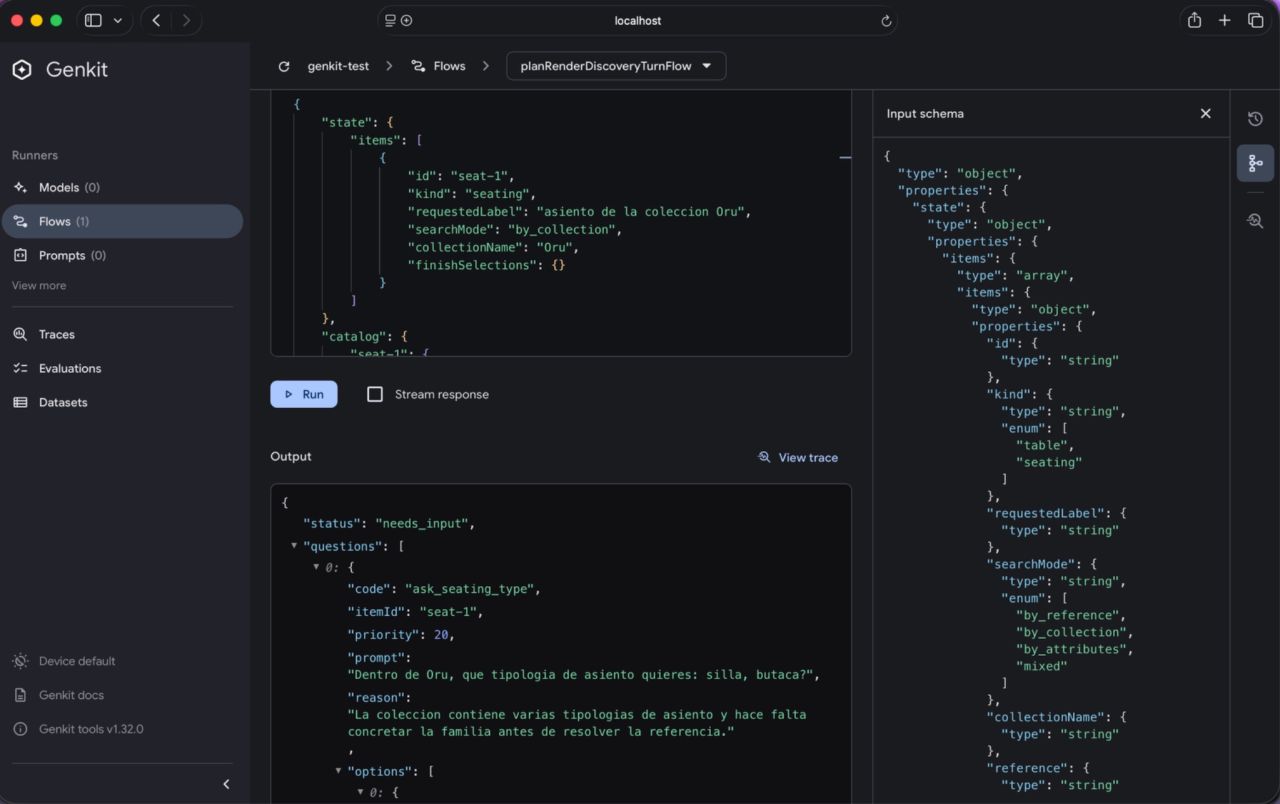
Having it available in TypeScript helps a lot. But what I like most so far is the way it lets you define input schemas and add validations without turning everything into a mess.
You can structure what enters each flow much more clearly, control behavior more reliably, and prevent a lot of errors from the start. And once you begin chaining real logic together, that matters a great deal.
Another area that feels especially well solved is the visual layer. The UI is clean, clear, and genuinely useful. It gives you visibility into what goes in, what comes out, and what is happening at each step, without feeling like an afterthought.
It feels like part of a development experience designed with intention, not just a functional add-on.
In the end, that is what I value most: technology that lets you build, test, and understand what you are doing quickly.
I still have more ground to cover before forming a deeper view, but so far Genkit has left a very solid impression.
After explaining what Nala is and why it makes sense as a product, the technical side deserves its own space.
It also helps to remember what the acronym stands for: Natural Adaptiv…